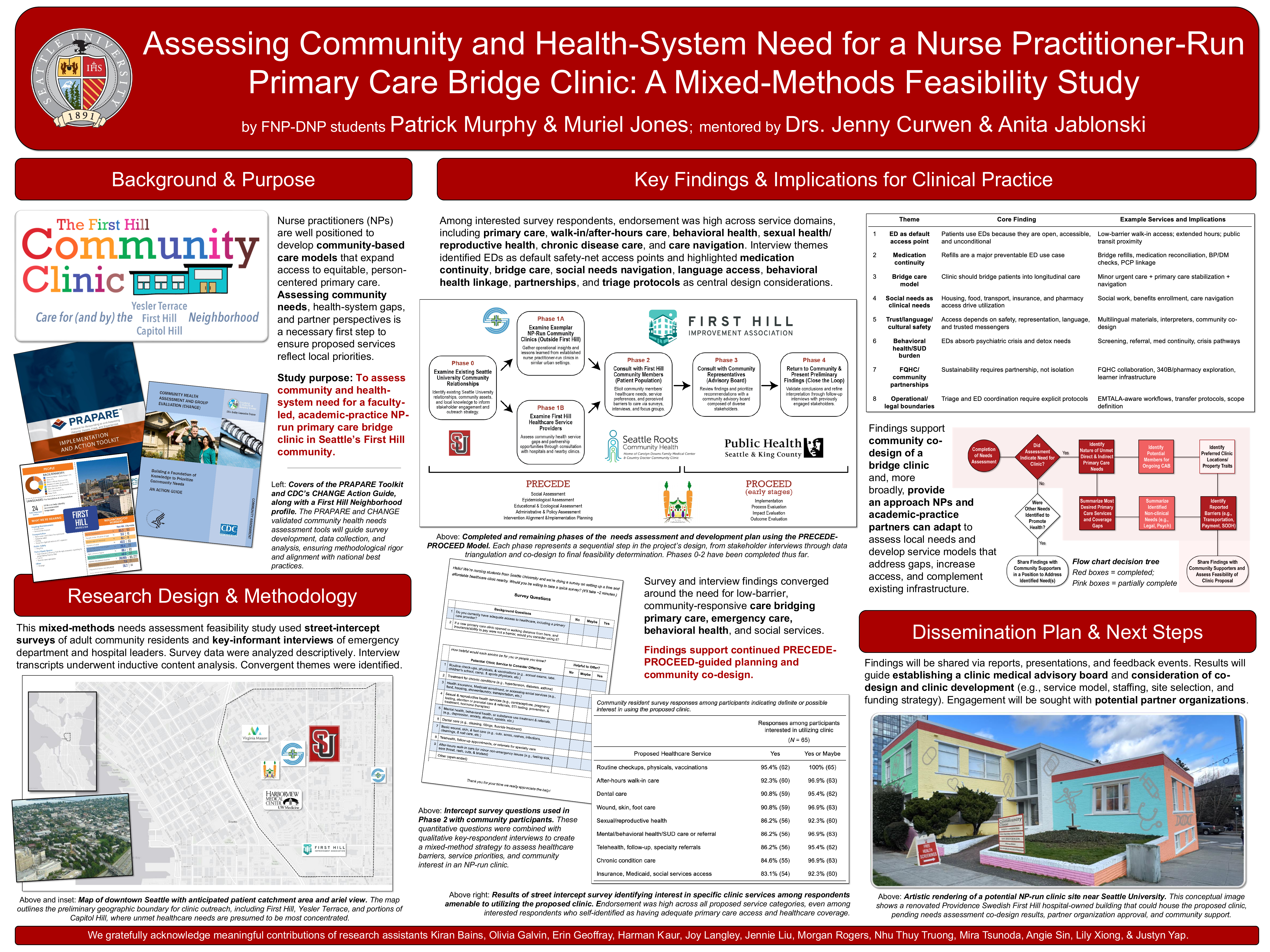
Assessing Community and Health-System Need for a Nurse Practitioner-Run Primary Care Bridge Clinic
Background: Nurse practitioners (NPs) are well positioned to develop community-based models that expand equitable, person-centered care. Assessing community needs, health-system gaps, and partner perspectives helps ensure services reflect local priorities and needs.
Purpose: To assess community and health-system needs for, and feasibility of, a faculty-led, academic-practice NP-run primary care bridge clinic in an urban underserved community.
Methodology: This mixed-methods feasibility study used street-intercept surveys of adult community residents and key-informant interviews with local emergency departments and hospital leaders. Survey data were analyzed descriptively; interview transcripts underwent inductive content analysis.
Results: Endorsement was high across primary care service domains, including walk-in/after-hours of care, chronic disease care, behavioral health, reproductive health, and care navigation. Interview themes highlighted medication continuity, bridge care, social needs navigation, language access, behavioral health linkage, and triage protocols as central design considerations.
Conclusions: Survey and interview findings converged around the need for low-barrier, community-responsive care bridging primary care, emergency care, behavioral health, and social services. Findings support PRECEDE-PROCEED-guided community co-design before implementation.
Implications: Findings support community co-design of a bridge clinic and, more broadly, provide an approach NPs and academic-practice partners can adapt to assess local needs and develop service models that address gaps, increase access, and complement existing infrastructure.
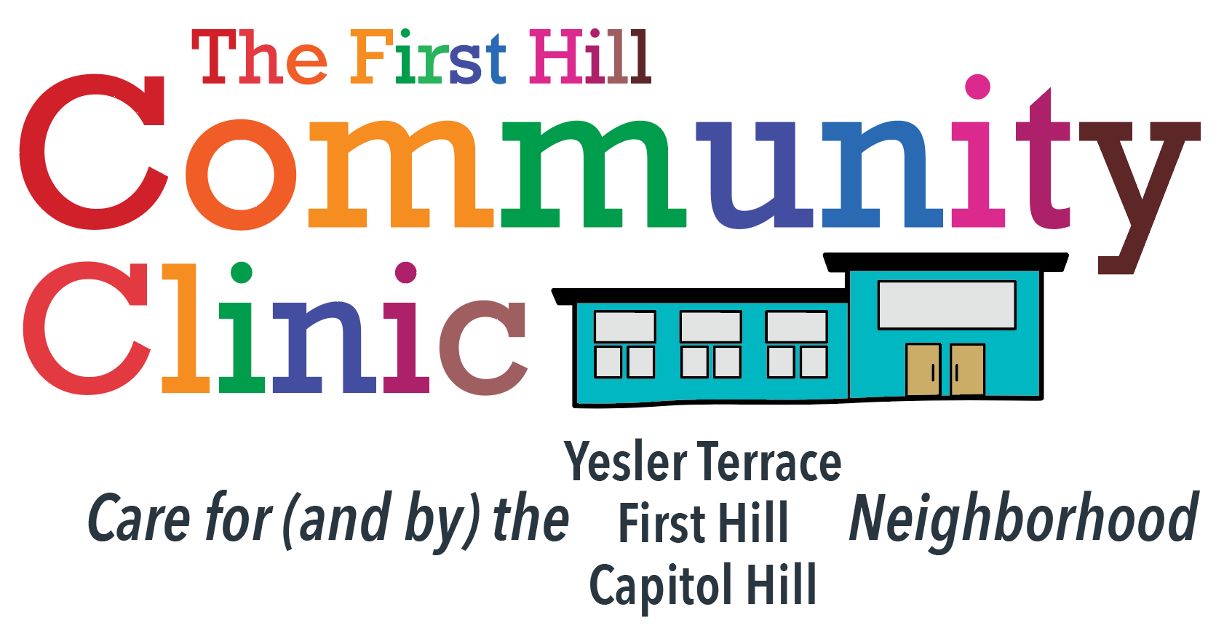
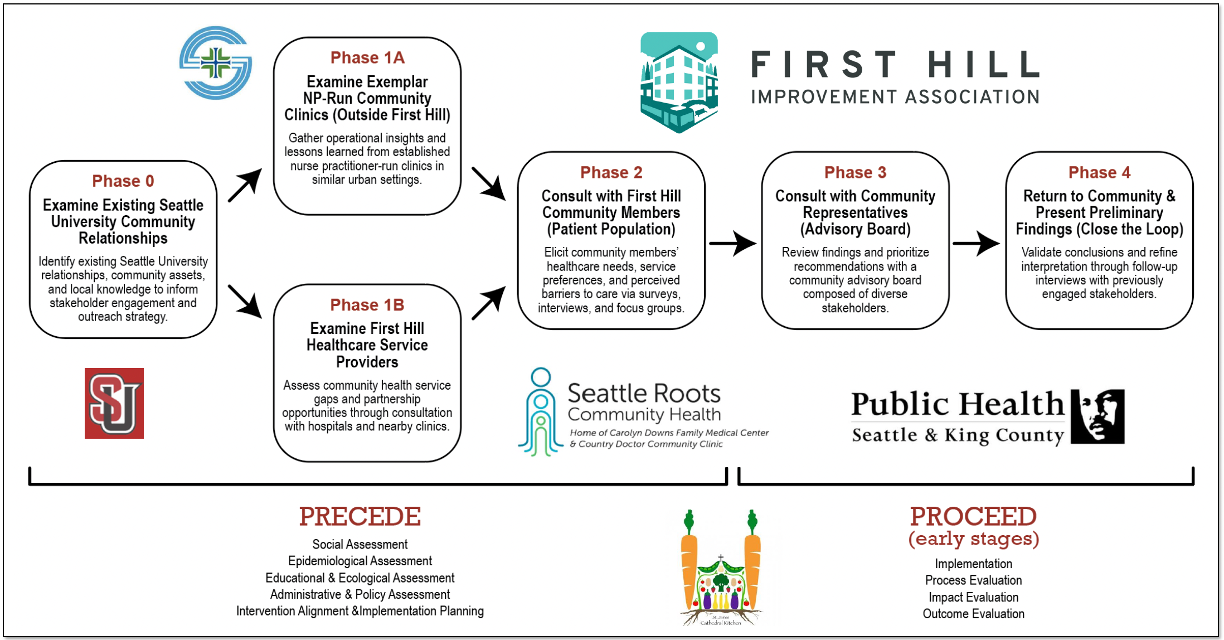
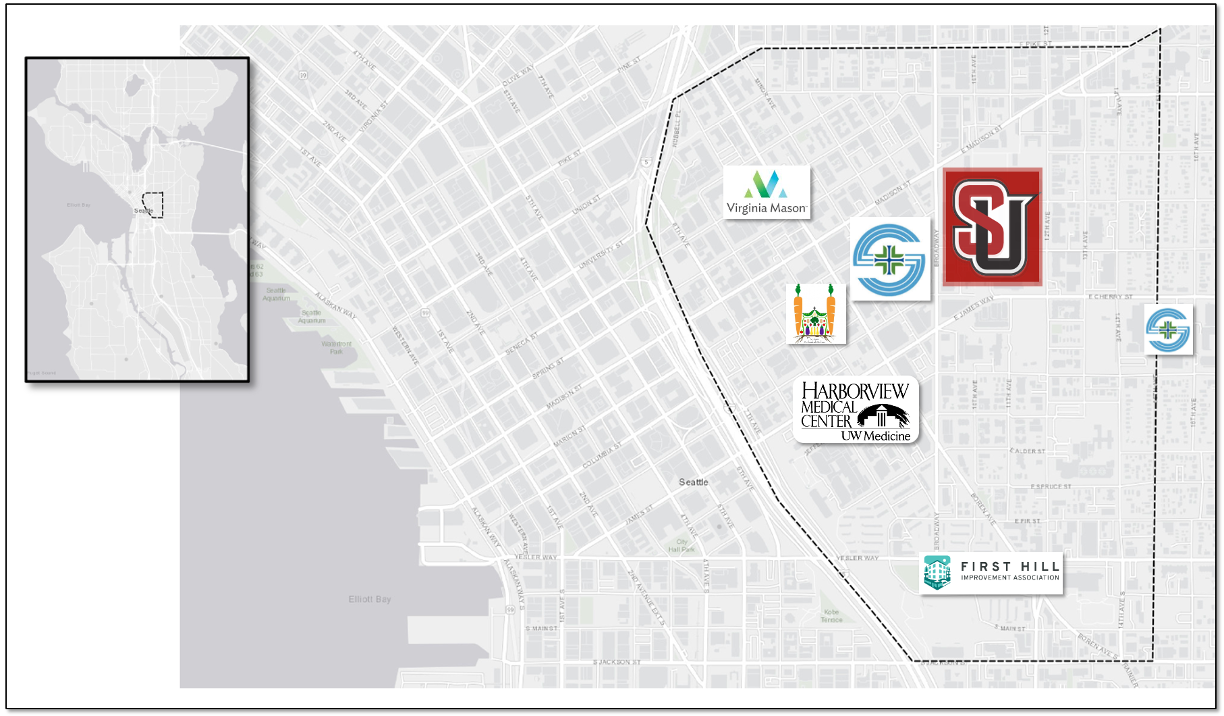
Needs assessment feasibility study poster
The poster below provides a graphical overivew of the clinical proposal needs assessment and feasibility study to-date. Additional work is ongoing. Clinic service model is to be co-designed with, by, and for members of the neighborhood community that the clinic seeks to serve.